

Editorial Disclaimer: This article is for general educational purposes only. Claimifio is not a licensed insurance agent or financial advisor. Always consult a licensed professional before making any insurance or financial decisions.
Your Global Classroom Awaits: Don’t Let the Unexpected Derail Your Study Abroad Dream
The year 2025 is on the horizon, bringing with it the incredible opportunity to study abroad – an experience that promises academic growth, cultural immersion, and unforgettable memories. For many students and their families, it’s a monumental step, filled with anticipation and meticulous planning. But amidst the excitement of choosing courses and packing suitcases, there’s one vital item that often gets overlooked until the last minute: Travel Insurance for Students Studying Abroad.
Think of it: unexpected medical emergencies in a foreign country, lost luggage, flight cancellations, or even a sudden family crisis back home that forces you to return early. These aren’t just inconveniences; they can lead to massive financial stress and derail your entire experience. Standard health insurance often doesn’t cut it overseas, leaving you vulnerable. This comprehensive guide is designed for you, the aspiring international student (and your concerned parents!), to demystify Travel Insurance for Students Studying Abroad, helping you understand your options, navigate coverage, and secure your adventure with confidence.
1. Why Standard Coverage Isn’t Enough: The Case for International Student Insurance
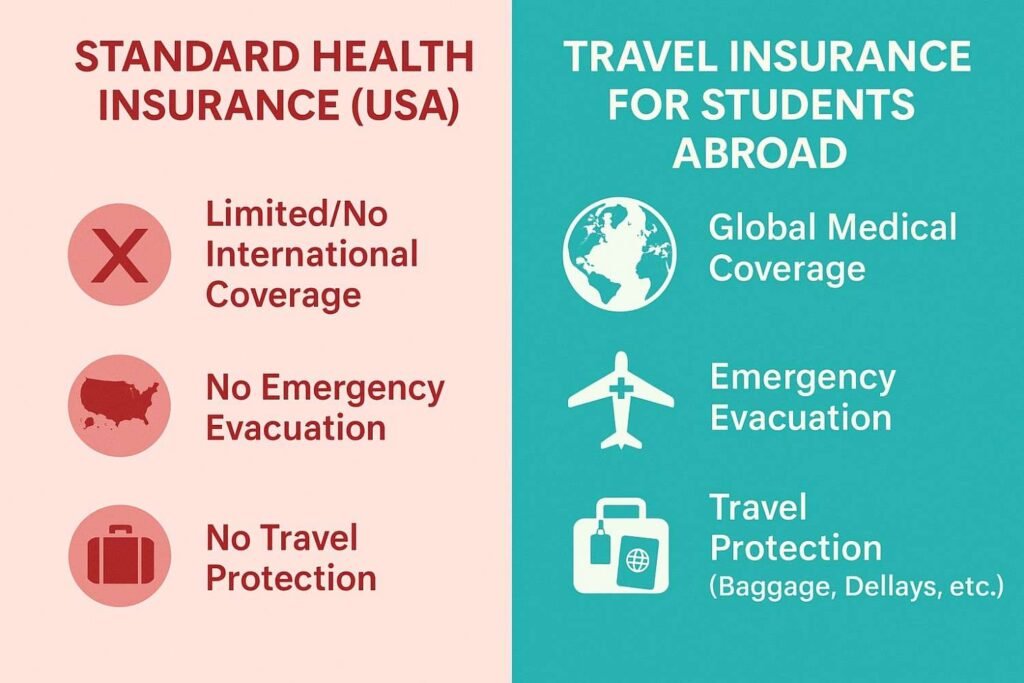
It’s a common misconception that your existing health insurance (like your parent’s plan or your university’s domestic plan) will fully protect you when you’re thousands of miles away. Unfortunately, this is rarely true.
- Geographic Limitations: Most US-based health insurance plans offer very limited, if any, coverage outside the United States. They might cover emergencies, but rarely routine care, and often require you to pay upfront and then seek reimbursement – a slow, complex process from abroad.
- Out-of-Network Costs: Even if your plan offers some international coverage, you’ll almost certainly be “out-of-network,” leading to significantly higher costs and deductibles.
- Emergency Evacuation: Standard plans almost never cover the astronomical costs of emergency medical evacuation back to the US, which can run into six figures.
- Non-Medical Emergencies: Beyond health, what about lost passports, flight cancellations, or stolen belongings? Your domestic health plan covers none of these.
This is why specialized international student insurance is not just recommended, but often required by universities and host countries for students planning to study abroad in 2025. It’s purpose-built for the unique risks of living and studying overseas.
Case Study: A Sudden Illness in Rome
Sophia, a student from New York studying art history in Rome, suddenly developed a high fever and severe stomach pain. Her university’s basic student health plan offered minimal overseas coverage. With her Travel Insurance for Students Studying Abroad policy, she was able to:
- Call her insurer’s 24/7 assistance line, who directed her to a trusted English-speaking clinic within their network.
- Have the insurance company arrange direct billing for her emergency doctor’s visit and necessary medication.
- Receive clear guidance on follow-up care without worrying about immediate out-of-pocket costs.
Without this specialized coverage, Sophia’s experience could have been far more financially stressful and medically complicated.
2. Key Coverages: What to Look for in Student Travel Insurance Plans
When selecting student travel insurance plans for your 2025 adventure, it’s crucial to understand the essential components that offer comprehensive protection. Don’t just focus on the lowest price; ensure you’re covered for the most critical scenarios.
Core Coverages You Need:
- Emergency Medical Expenses: This is paramount. It covers doctor’s visits, hospital stays, surgery, prescription drugs, and diagnostic tests for unexpected illnesses or injuries while abroad. Look for high limits ($100,000 to $500,000+).
- Emergency Medical Evacuation: Often the most expensive and critical coverage. It pays to transport you to the nearest adequate medical facility or, if necessary, back to your home country for treatment.
- Repatriation of Remains: While somber, this covers the cost of returning your remains home if the unthinkable occurs.
- Trip Cancellation/Interruption:
- Cancellation: Reimburses non-refundable costs (tuition, flights, accommodation) if you have to cancel your trip before departure due to a covered reason (e.g., severe illness, family emergency, unexpected job loss).
- Interruption: Covers costs if your trip is cut short after departure due to a covered reason.
- Baggage Loss/Delay: Reimburses you for lost, stolen, or damaged luggage, and provides funds for essential items if your bags are delayed for several hours.
- Travel Delay: Compensates you for unexpected expenses (accommodation, meals) if your departure is delayed by a covered event (e.g., airline mechanical issues, severe weather).
- Accidental Death & Dismemberment (AD&D): Provides a payout for accidental death or loss of limb/sight.
Some policies for Study abroad insurance 2025 may also include coverage for passport replacement, legal assistance, or even adventure sports if you plan on specific activities.
3. Finding the Best Travel Insurance for Students: Tips for 2025 Applicants
With a myriad of options available, finding the best travel insurance for students can feel overwhelming. Here’s how to simplify your search for your 2025 study abroad experience:
- Check University Requirements: Your host university or study abroad program might have mandatory insurance requirements (e.g., minimum medical coverage, specific types of evacuation). Always start here.
- Compare Multiple Providers: Don’t settle for the first quote. Use online comparison sites or work with an independent insurance broker specializing in international student plans. Look at providers known for emergency medical travel insurance for students.
- Read the Fine Print (Policy Wording): Pay close attention to:
- Exclusions: What’s not covered (e.g., pre-existing conditions, high-risk sports, alcohol/drug-related incidents).
- Deductibles: How much you pay out-of-pocket per claim.
- Claim Process: How easy is it to file a claim from abroad? What documentation is needed?
- 24/7 Assistance: A crucial feature for any Travel Insurance for Students Studying Abroad policy.
- Consider “Cancel For Any Reason” (CFAR) (Optional, but useful): This add-on is more expensive but allows you to cancel your trip for any reason (not just covered reasons) and get a partial reimbursement. Useful for parents who want maximum flexibility.
- Look for Annual vs. Single Trip: If you plan multiple international trips in a year, an annual multi-trip policy might be more cost-effective. For a single study abroad program, a single-trip policy covering the entire duration is typically best.
Case Study: A Family’s Unexpected Cancellation
The Miller family’s daughter, Chloe, was set to study in London for a semester in Fall 2025. Two weeks before departure, Mr. Miller had an unexpected medical emergency. Thanks to the trip cancellation coverage included in their Travel Insurance for Students Studying Abroad plan, they were able to recoup the non-refundable tuition deposit, airfare, and accommodation costs, significantly easing the financial strain of cancelling Chloe’s trip. This highlights the importance of comprehensive financial protection for students.
For a deeper dive into policy terms, read our guide on Travel Insurance Claim Guide for Lost Baggage.
4. Staying Safe & Claiming Smoothly: Travel Insurance Tips for Students
Having student health abroad coverage is fantastic, but knowing how to use it effectively is paramount.
- Keep Policy Info Handy: Store your policy number, emergency contact details, and a digital copy of your policy on your phone and in a cloud service. Share it with your parents/guardians.
- Notify Your Insurer ASAP: For emergencies, call their 24/7 assistance line immediately. For non-emergencies, notify them within the timeframe specified in your policy.
- Document Everything Meticulously:
- Medical: Get itemized bills (in English if possible), medical reports, and proof of payment.
- Baggage: File a report with the airline/police immediately. Keep all airline tags and boarding passes.
- Theft: File a police report promptly.
- Delays: Get official statements from the airline/tour operator.
- Understand Direct Billing vs. Reimbursement: Always clarify with your insurer if direct billing is possible before receiving expensive treatment. If you pay upfront, keep all receipts.
- Take Reasonable Steps to Mitigate Loss: Don’t ignore a treatable illness. Your policy expects you to seek appropriate medical attention.
By following these travel insurance tips for students, you can significantly streamline any claim process and focus on your studies and experiences.
For official government information, travel advisories, and resources for US citizens studying abroad, visit the U.S. Department of State – Students Abroad section.
FAQ: Travel Insurance for Students Studying Abroad
Q: Is travel insurance mandatory for studying abroad?
A: Often, yes. Many host universities, programs, and even some countries require international students to have specific levels of Travel Insurance for Students Studying Abroad. Always check your program’s requirements.
Q: Will my US health insurance cover me while studying abroad?
A: Generally, no, or only very minimally. Most US-based health insurance plans have limited or no coverage outside the US. Dedicated international student insurance is almost always a necessary supplement.
Q: What if I have a pre-existing condition? Can I still get coverage?
A: Yes, but it varies. Some policies may exclude pre-existing conditions, while others offer waivers or cover for an additional premium. Always declare pre-existing conditions truthfully during application.
Q: How much does travel insurance for students typically cost?
A: Costs vary widely based on the duration of your trip, destination, age, coverage limits, and chosen provider. You can often find affordable study abroad insurance options ranging from a few hundred to over a thousand dollars for a semester or year-long program.
Q: What if my program gets cancelled due to unforeseen circumstances (e.g., pandemic)?
A: Standard trip cancellation coverage typically covers specific reasons (illness, death). For broader protection against unforeseen global events, you might need “Cancel For Any Reason” (CFAR) coverage, which is an upgrade and more expensive. Check policy wording carefully.

Your Journey, Protected: Embrace Your 2025 Study Abroad Adventure
Studying abroad in 2025 promises to be a transformative chapter in your life. While the focus will naturally be on academics and exploration, safeguarding yourself against the unforeseen is a fundamental part of responsible international travel. Travel Insurance for Students Studying Abroad isn’t just a backup plan; it’s an essential tool that provides peace of mind, financial protection, and the freedom to fully immerse yourself in your global experience.
Don’t let medical emergencies, travel disruptions, or lost belongings become the defining memories of your time overseas. Arm yourself with the right coverage, understand its benefits, and embark on your adventure with confidence, knowing you’re well-prepared for anything that comes your way.
Start comparing Travel Insurance for Students Studying Abroad plans today! Secure your unforgettable 2025 study abroad journey with complete peace of mind.

Written by Imran Khan
Founder & Lead Content Specialist, Claimifio
Imran Khan is the founder of Claimifio, an independent insurance education publication helping everyday renters, homeowners, and expats understand their coverage rights and claims processes. With a background spanning 8+ years in digital publishing and content research, Imran has spent the last several years studying insurance policy language, policyholder rights, and the gaps between what people think their policy covers — and what it actually pays out. Every guide on Claimifio is researched from primary sources including the Insurance Information Institute, NAIC, and official policy documentation, and written in plain English so you can take action with confidence. Claimifio is an independent educational resource. We are not a licensed insurance agent, broker, or financial advisor. Always consult a licensed professional for advice specific to your situation.
Important Disclaimer: The content on Claimifio.com is for general educational and informational purposes only. We are not licensed insurance agents, brokers, or financial advisors. Nothing here constitutes professional insurance or financial advice. Insurance laws, rates, and requirements vary by state and country. Always consult a licensed insurance professional before making any policy decisions.