

Editorial Disclaimer: This article is for general educational purposes only. Claimifio is not a licensed insurance agent or financial advisor. Always consult a licensed professional before making any insurance or financial decisions.
Fender Bender Blues: Can You File a Car Insurance Claim Without a Police Report?
You’ve just been in a minor car accident: a parking lot ding, a gentle scrape, or maybe you backed into a mailbox. There are no injuries, the damage seems minimal, and everyone agrees it was a simple oversight. Your first thought might be to exchange information and move on, skipping the lengthy process of waiting for the police. But then a nagging question surfaces: Can you file a Car Insurance Claim Without a Police Report?
The short answer is often yes, but with significant caveats. While a police report is typically the gold standard for documenting an accident, it’s not always legally required, especially for minor incidents or those occurring on private property. However, the absence of an official report places a greater burden on you to provide rock-solid documentation to your insurer.
This guide will walk you through the specifics of Filing a Car Insurance Claim Without a Police Report in the USA, helping you understand when it’s permissible, what vital evidence you’ll need, and how to protect yourself from potential claim denial.
1. When is a Police Report Not Required (and When It Is)
Understanding your legal obligations after an accident is the first step. State laws vary significantly, but general guidelines exist.
When You Might Skip the Police Report:
It’s generally acceptable to not call the police for a minor car accident no police report scenario if all of the following conditions are met:
- No Injuries: No one involved in the accident (drivers, passengers, pedestrians) appears to be injured, even superficially. Any indication of injury, no matter how small, usually mandates a report.
- Minimal Property Damage: The damage to either vehicle or property (e.g., a lamppost, fence) is very minor, typically below a state-mandated monetary threshold (which can be as low as $500 or as high as $2,500, depending on the state).
- Both Parties Agree: All involved parties agree on the circumstances of the accident, liability, and the decision not to involve law enforcement.
- Private Property Accident: The incident occurred on private property (e.g., a parking lot, private driveway), where police may have limited jurisdiction for official reports.
When a Police Report Is Essential:
You must call the police and file a report if:
- Injuries or Fatalities: Any person is injured or killed. This is non-negotiable.
- Significant Property Damage: Damage exceeds your state’s reporting threshold. Even if you think it’s minor, it’s safer to err on the side of caution.
- Dispute Over Fault: If there’s any disagreement about who caused the accident or the details of what happened.
- Hit and Run: If one party flees the scene.
- Impairment: If you suspect the other driver is under the influence of drugs or alcohol.
- Uninsured/Underinsured Motorist: If the other driver appears to lack insurance.
To understand your state’s specific accident reporting laws, consult your local State Department of Motor Vehicles (DMV) or Department of Transportation (DOT) website. These rules often dictate thresholds for damage or injury that mandate a police report.
2. Your New “Police Report”: Crucial Documentation for a Claim
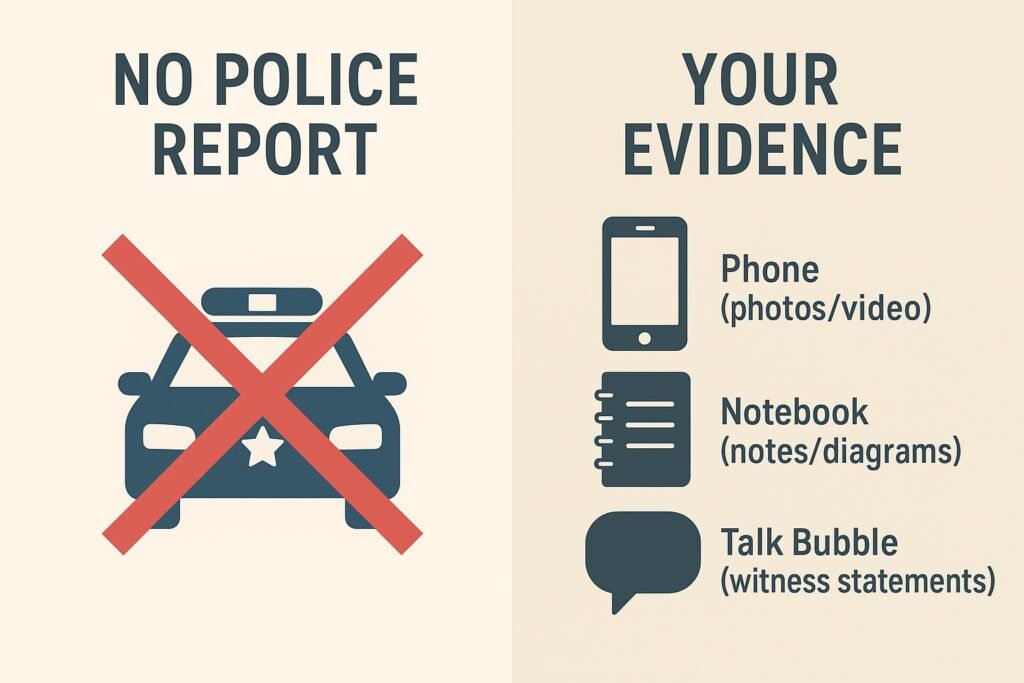
Without an official police report, you become the primary gatherer of evidence. The adjuster evaluating your Car Insurance Claim Without a Police Report needs a clear, undeniable picture of what happened, who was involved, and the extent of the damage. This detailed documentation is your Alternative evidence for car accident claim.
Your Essential Accident Documentation Checklist:
- Contact Information:
- Full name, phone number, email, and address for all drivers and vehicle owners involved.
- Driver’s license numbers.
- License plate numbers.
- Insurance company name and policy number for all vehicles.
- Contact information for any passengers (in case they become witnesses).
- Witness Information:
- Names and contact information (phone, email) of anyone who saw the accident.
- Ask them what they saw and if they are willing to provide a written statement or speak to your insurer.
- Photos and Videos (Your Most Powerful Tool!):
- Vehicle Position: Photos showing the exact position of all vehicles involved immediately after the accident, before they are moved.
- Damage: Close-up photos of all damage to all vehicles (even minor scrapes), from multiple angles. Don’t forget photos of any damage to your own vehicle.
- Scene Overview: Wide-angle photos showing the general area, including street signs, landmarks, traffic signals, skid marks, debris, and weather conditions.
- License Plates: Clear photos of all license plates.
- Driver’s License & Insurance Cards: Photos of these documents (verify against ID).
- Injuries: If there are any minor injuries, photograph them (though remember, injuries usually mean you should call the police).
- Written Notes & Diagrams:
- Date, Time, Location: Exact details.
- Accident Description: Your detailed written account of what happened, from your perspective. Be factual, not emotional.
- Accident Diagram: A simple drawing showing the position and direction of all vehicles, points of impact, and relevant street names or landmarks.
- Statements from Other Parties: If the other driver makes a statement, write it down. Do not admit fault.
Crucial Tip: Use your smartphone. Take dozens of pictures and short videos. The more, the better!
3. The Claims Process: How to File an Auto Insurance Claim Without a Police Report
Once you have meticulously gathered your evidence, the process for Filing a Car Insurance Claim Without a Police Report officially begins with your insurer.
Step 1: Notify Your Insurer Immediately
- Contact your insurance company as soon as possible after the accident. Do not delay.
- Explain the circumstances: that it was a minor accident, no police report was filed (and why), and you have comprehensive documentation.
- Obtain a claim number.
Step 2: Provide Your Evidence to the Adjuster
- Your insurance company will assign an adjuster to your case.
- Submit all your collected photos, videos, witness statements, and written notes. Be proactive in providing this information.
- Be honest and factual when speaking with the adjuster.
Hypothetical Scenario A: The Parking Lot Fender-Bender
Sarah backs her car out of a parking spot in a grocery store lot and lightly scrapes the bumper of a parked car. The other driver is present, and there’s a small scratch on both vehicles. No one is hurt.
- Sarah’s Actions: She takes photos of both cars’ damage from multiple angles, exchanges contact and insurance info, and notes the precise location and time. She gets the name and number of a bystander who saw it happen.
- Claim Process: She calls her insurer immediately, provides all her documentation, and explains it’s a private property car accident claim with minor damage.
- Outcome: With clear evidence of damage and contact info, her collision coverage (if she has it) will cover her damage, and liability coverage (if she’s at fault) will cover the other car’s damage, even without a police report.
Understanding who pays for what is key. Learn more about Understanding Collision Coverage and What it Pays For.
4. Potential Challenges & Claim Denial Prevention
While possible, Filing a Car Insurance Claim Without a Police Report can present challenges. Being prepared for these will help you prevent claim denial car accident no police report.
- Disputed Fault: Without a police report, it’s easier for the other driver to later dispute what happened or deny responsibility, even if they initially agreed. Your detailed photos and witness statements become critical here.
- Uncooperative Other Driver: The other driver might stop responding, making it harder for your insurer to gather their statement or information. Again, your initial diligent documentation is your only recourse.
- Delayed Reporting: Waiting too long to report the incident to your insurer can lead to questions or denial, regardless of whether a police report exists.
Hypothetical Scenario B: Single-Car Incident in a Driveway
Mark accidentally backs his truck into his own garage door, causing damage to both the truck’s tailgate and the garage. No other vehicles or people were involved.
- Mark’s Actions: He immediately takes comprehensive photos of the damage to his truck and the garage door. He notes the date and time.
- Claim Process: He calls his insurer, explaining it was a single-car incident on his private property.
- Outcome: This is a straightforward Car Insurance Claim Without a Police Report. His collision coverage would cover his truck’s damage, and his homeowners insurance (or another part of his auto policy, depending on the damage) might cover the garage door, all without police involvement.
FAQ: Car Insurance Claim Without a Police Report
Q: What if the other driver stops cooperating after we exchange info?
A: This is a common challenge. Your detailed photos, witness contact info, and any notes from your initial conversation become vital. Your insurer will try to contact them, but your evidence is your strongest asset.
Q: Is there a time limit to file a claim without a police report?
A: Yes. Your insurance policy has specific deadlines for reporting an accident, usually within a few days or weeks. Always report it as soon as possible, regardless of a police report.
Q: Will a claim without a police report affect my insurance rates?
A: Any at-fault claim can potentially affect your rates, whether or not a police report was filed. The key factor is fault and the cost of damages, not the report itself.
Q: Should I get a written statement from the other driver?
A: It’s ideal if they are willing. A handwritten note acknowledging their fault or the basic facts of the accident, signed and dated, is excellent documentation. Always avoid admitting fault yourself.
Q: My state requires reporting accidents over a certain dollar amount. How do I know the damage cost without a police report?
A: This is tricky. If you’re unsure if damage exceeds the threshold, it’s safer to call the police. For very minor damage, get a quick estimate from a body shop before deciding.
Your Best Defense is Diligence: Drive Prepared
While Filing a Car Insurance Claim Without a Police Report is often possible for minor incidents, it demands thoroughness. The moment you decide not to call law enforcement, you become the chief investigator, gathering the evidence your insurer will need to process your claim. By meticulously documenting the scene, collecting contact information, and promptly notifying your insurance provider, you empower yourself to navigate the process smoothly and secure the compensation you deserve.
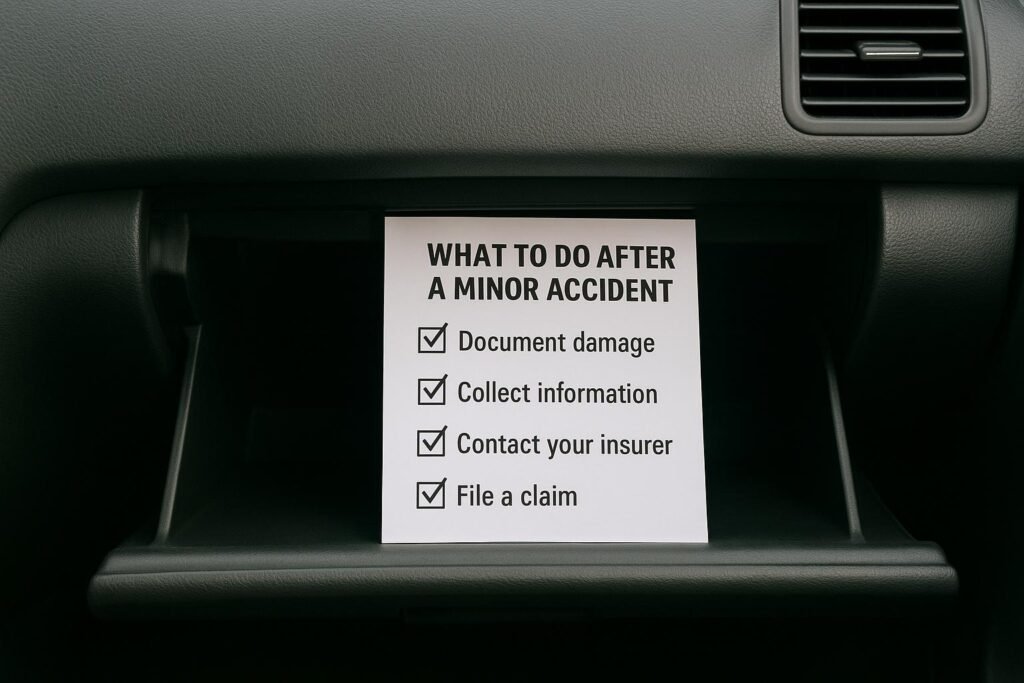
Don’t get caught unprepared! Download and save our essential accident documentation checklist to your phone or print a copy for your glove compartment today!

Written by Imran Khan
Founder & Lead Content Specialist, Claimifio
Imran Khan is the founder of Claimifio, an independent insurance education publication helping everyday renters, homeowners, and expats understand their coverage rights and claims processes. With a background spanning 8+ years in digital publishing and content research, Imran has spent the last several years studying insurance policy language, policyholder rights, and the gaps between what people think their policy covers — and what it actually pays out. Every guide on Claimifio is researched from primary sources including the Insurance Information Institute, NAIC, and official policy documentation, and written in plain English so you can take action with confidence. Claimifio is an independent educational resource. We are not a licensed insurance agent, broker, or financial advisor. Always consult a licensed professional for advice specific to your situation.
Important Disclaimer: The content on Claimifio.com is for general educational and informational purposes only. We are not licensed insurance agents, brokers, or financial advisors. Nothing here constitutes professional insurance or financial advice. Insurance laws, rates, and requirements vary by state and country. Always consult a licensed insurance professional before making any policy decisions.