

Insurance for Homes Abroad: A Guide for US Citizens and Residents (2026)
Imagine finally holding the keys to that rustic villa in Tuscany or a modern beachfront condo in Cabo San Lucas. The “Second Home Dream” is officially a reality. But as the sun sets over your new horizon, a cold financial reality often sets in: your standard US homeowners policy from State Farm, Geico, or Liberty Mutual likely stopped providing coverage the moment you crossed the border.
In 2026, we’ve seen a massive surge in Americans purchasing property abroad, driven by remote work flexibility and “Golden Visa” programs. However, many new owners fall into a dangerous trap, assuming their global nest egg is automatically protected. Whether you’re looking for retirement peace of mind or a lucrative rental property, understanding insurance for homes abroad is the difference between a sound investment and a total loss.
At Claimifio, we specialize in bridging the gap between complex insurance jargon and practical financial literacy. Please note: Claimifio is an educational platform and does not sell insurance or act as a brokerage. This guide is designed to empower you with the knowledge needed to protect your international assets.
The “Why”: More Than Just Fire and Theft
For most US owners, insurance for homes abroad isn’t just a “good idea”—it’s a legal or financial necessity.
- Mortgage Compliance: If you are financing your purchase through an international lender or a specialized US expat loan, they will mandate comprehensive property insurance to protect their collateral.
- Visa Requirements: Several countries (like Portugal or Greece) require proof of property insurance as part of the residency or “Golden Visa” application process.
- The Lawsuit Shield: In many countries, the “slip and fall” culture isn’t as litigious as the US, but personal liability is still a massive risk. If a guest or worker is injured on your property in Costa Rica, you are responsible for their medical care and potential lost wages.
Types of Global Property Coverage: Where to Buy?
Look, the fine print in a foreign language is a nightmare. You generally have three paths to securing coverage.
1. Local Policies (The Native Approach)
Buying from a local insurer in the country where your home is located.
- Pros: Usually the most affordable option; compliant with all local building codes and laws.
- Cons: Policies are written in the local language; claims are handled via local time zones; coverage limits might be lower than what US owners are used to.
2. US-Based International Policies (The Expat Specialty)
Companies like Clements Worldwide or AIG offer “Expat Property Insurance” specifically for Americans.
- Pros: Policies are in English; premiums and claims are paid in US Dollars (protecting you from currency swings); they understand US liability expectations.
- Cons: Often more expensive than local options.
3. Admitted vs. Non-Admitted Paper
This sounds technical, but here is the simple “human” version:
- Admitted Insurance: The insurer is licensed and regulated by the specific country’s insurance authority. If the company goes bust, the local government might have a “guaranty fund” to pay your claim.
- Non-Admitted Insurance: The insurer isn’t local (like a Lloyd’s of London policy covering a house in Italy). While these are often more flexible for high-value homes, you usually have zero recourse with the local government if the insurer fails.
The US Tax & Legal Connection
Owning property abroad puts you in the crosshairs of the IRS. If you use your home as a rental, your insurance is actually your best tax friend.
Tax Deductions (Schedule E)
According to IRS Publication 527, if you rent out your foreign home, you can typically deduct the cost of your insurance premiums as a direct rental expense on Schedule E of your Form 1040. This significantly lowers your taxable rental income.
The FBAR and FATCA Trap
Here is the trap most Americans fall into: To pay for your local insurance in Mexico or Italy, you likely opened a local bank account.
- FBAR: If the total value of your foreign accounts exceeds $10,000 at any point during the year, you must report it to the Treasury (FinCEN).
- FATCA: If your foreign assets are even higher ($50k+), you may need to file Form 8938 with your tax return. Failing to report the account you use to pay your insurance can result in penalties that far exceed the cost of the house itself.
Key Risks to Look For: The Global Fine Print
Foreign landscapes bring foreign risks. You need to ensure your policy specifically addresses:
- Political Risk & Civil Unrest: In emerging markets, standard policies often exclude damage from riots or government expropriation. You may need a “Political Risk” rider.
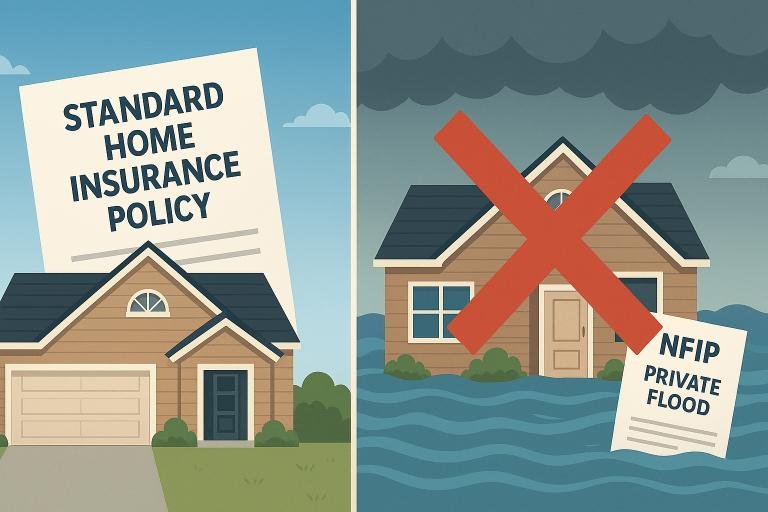
- Natural Disasters (Named Perils): In the Caribbean, your policy must specify “Windstorm/Hurricane.” In the Mediterranean, “Earthquake” is a separate add-on. Don’t assume “All-Risk” actually means everything.
- The “Vacancy” Clause: This is the #1 reason nomad claims are denied. Many local policies state that if the home is empty for more than 30 or 60 days, coverage is suspended. If you only visit twice a year, you need a “Unoccupied Home” endorsement.
Common Hazards Table
| Risk Factor | Caribbean/Mexico | Europe (Italy/Portugal) | Central America |
| Primary Threat | Hurricanes / Flooding | Earthquakes / Wildfire | Volcanic Ash / Mudslides |
| Typical Exclusion | Storm Surge (Flood) | Historic Preservation Costs | Theft of External Fixtures |
| Key Add-on Needed | “Hydro-meteorological” | Liability for Ancient Walls | Political Violence |
Practical Strategy: “The Deductible Play”
How do you save money on insurance for homes abroad without leaving yourself exposed?
The Strategy: Take a significantly higher deductible (the amount you pay out of pocket) on the physical structure of the house. Most US owners can afford a $5,000 or $10,000 repair bill. By raising that deductible, you can lower your monthly premium by 20-30%.
Use those savings to buy the highest possible Personal Liability limits. While your house can be rebuilt, a legal judgment for a catastrophic injury on your property can follow you back to your US bank accounts.
Case Study: Retiree Rick’s Mexican Condo
“Retiree Rick” bought a beautiful beachfront condo in Akumal, Mexico. To save money, he used a local agent and a basic “Spanish-only” policy. He didn’t realize his policy excluded “Hydro-meteorological events” (the local term for hurricanes and heavy sea surges) unless specifically added.
When a major storm hit in 2025, Rick’s $40,000 in water damage was denied because it wasn’t a “fire or theft.”
In contrast, his neighbor used an international “Expat” policy written in English. Even though she paid $300 more per year in premiums, her policy covered the storm surge, and her claim was settled in US Dollars, allowing her to hire contractors immediately without worrying about the Peso’s fluctuation.
FAQ: Insurance for Homes Abroad
1. Can I just use my US umbrella policy for my home in Italy?
Generally, no. Most US personal umbrella policies only provide “excess” liability coverage for properties already listed on a primary policy. If you don’t have a primary Italian property policy, the umbrella won’t “drop down” to cover you.
2. Does insurance for homes abroad cover “loss of rent”?
Only if you add “Business Interruption” or “Fair Rental Value” coverage. This is vital if a fire makes your Airbnb unrentable for six months.
3. Is title insurance available abroad?
In many countries, no. However, for US citizens buying in Mexico or the Caribbean, specialized companies (like Stewart Title) offer title insurance to protect against “hidden” owners appearing years later.
4. Can I pay my premiums in Bitcoin or Crypto?
While some 2026 boutique insurers are experimenting with this, most traditional and “admitted” insurers still require local currency or US Dollars.
5. How do I file a claim if I’m back in the US?
This is why we recommend “International” plans for nomads. They offer 24/7 English-speaking claims hotlines and allow for digital photo submissions, so you don’t have to fly back just to show an adjuster a leaky roof.
Resources & Citations
- IRS Publication 527 (Residential Rental Property): irs.gov/pub/irs-pdf/p527.pdf
- US State Department – International Travel/Property: travel.state.gov
- Financial Crimes Enforcement Network (FBAR Guidance): fincen.gov/report-foreign-bank-and-financial-accounts
Disclaimer: This content is for informational purposes only and does not constitute financial, tax, or legal advice. Claimifio is an educational platform and is not a licensed insurance provider. Always consult with a qualified tax professional and a local attorney before purchasing property abroad.

Written by Imran Khan
Founder & Lead Content Specialist, Claimifio
Imran Khan brings over 8 years of experience in digital content creation and web development to Claimifio. As a Senior WordPress Developer at Zikra Infotech LLC, he has worked extensively with healthcare providers including emergency rooms, medical clinics, and specialty practices – giving him deep insight into the challenges patients and families face when navigating insurance systems.
His mission with Claimifio is simple: make insurance understandable for everyone. Every guide is researched thoroughly, written in plain English, and designed to help you take action with confidence.