

Introduction
If you recently underwent a surgical procedure, understanding how to file a health insurance claim after surgery is crucial to avoid unexpected costs. Filing claims may seem daunting, but with the right approach, you can ensure your insurance coverage works as intended. This guide simplifies the process, explaining key steps, tips, and potential pitfalls.

What is a Health Insurance Claim?
A health insurance claim is a request submitted to your insurance provider to cover or reimburse the costs of medical services, including surgeries. These claims ensure you pay only your portion of medical expenses, like deductibles or co-pays.
How it Works:
- Your healthcare provider bills the insurance company.
- The insurer reviews your policy and the medical documentation.
- You are notified of the amount covered and any out-of-pocket responsibility.
Tip: Always verify your plan’s coverage for in-network vs. out-of-network providers to maximize reimbursement.
Reference: Healthcare.gov – What is Covered
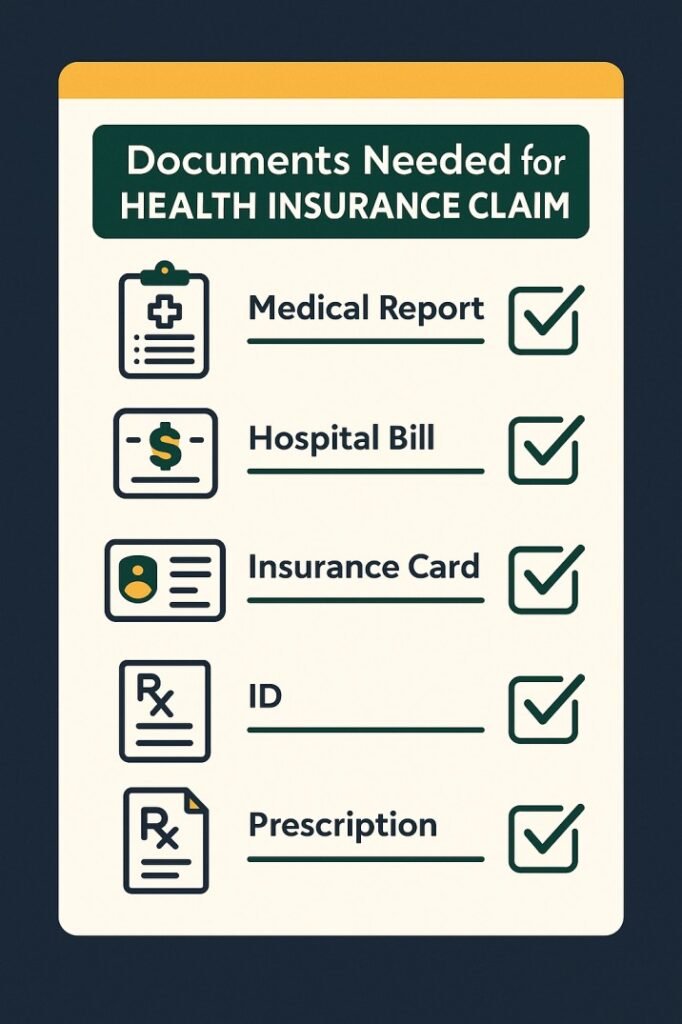
Step 1: Gather All Required Documents
efore filing, collect all necessary documents:
- Surgery invoices and itemized bills
- Hospital discharge summary
- Surgeon’s notes and procedure codes
- Insurance policy card and claim forms
- Pre-authorization or referral letters (if required)
Having these documents ready ensures a smooth claim submission process.
Pro Tip: Keep both digital and physical copies for easy reference.
Reference: CMS.gov – Filing Claims
Step 2: Verify Your Coverage
Check your policy to understand:
- Deductible and co-pay amounts
- In-network vs. out-of-network benefits
- Covered procedures
- Pre-authorization requirements
Knowing these details prevents claim denials or delays.
Reference: NAIC – Understanding Your Policy
Step 3: Submit the Claim
You can submit claims in several ways:
- Provider-submitted claims: Most hospitals and clinics submit claims directly to your insurer.
- Self-submitted claims: If your provider doesn’t file, you can submit using claim forms. Include all documentation and receipts.
Important: Always check that the billing codes match your insurance policy’s coverage to avoid processing errors.
Step 4: Track the Claim
Once submitted, monitor your claim status through:
- Insurance company portal
- Mobile apps
- Customer service support
Tracking ensures you catch issues early, like missing documentation or coding errors.
Step 5: Respond to Denials or Requests for Additional Info
f your claim is denied or requires more information:
- Review the reason for denial carefully.
- Provide missing documentation promptly.
- Contact your insurance provider for clarification.
Reference: Healthcare.gov – Appealing Health Insurance Decisions
Step 6: Understand Your Explanation of Benefits (EOB)
After processing, you’ll receive an EOB statement detailing:
- Amount billed by the provider
- Amount covered by insurance
- Your out-of-pocket responsibility
Use the EOB to reconcile bills and ensure the claim was processed correctly.
Step 7: Keep Records for Future Reference
Maintain a claim file for at least 2-3 years. Include:
- EOBs
- Medical bills
- Correspondence with the insurer
This is useful in case of audits, appeals, or discrepancies.
Tips to Avoid Common Mistakes
- File claims promptly after surgery
- Ensure accurate procedure codes
- Double-check provider details and policy numbers
- Avoid submitting incomplete forms
- Ask your provider to pre-authorize procedures when required
FAQs
1. How long does it take for a claim to be processed?
Most claims are processed within 2-6 weeks, depending on the insurer and completeness of documents.
2. Can I appeal a denied claim?
Yes, you can submit an appeal with additional documentation or clarification.
3. What if my surgery was emergency-related?
Emergency procedures are usually covered, but always check policy terms.
4. Are out-of-network claims reimbursed?
Partially, depending on your policy. Some plans require higher co-pays.
5. Can I file online?
Yes, most insurers provide online portals for claim submission.
6. Do I need to submit receipts for every charge?
Yes, itemized receipts support accurate claim processing.
7. What happens if the claim is rejected?
You can request a review or appeal within the insurer’s timeline.
8. How do I know if my provider submitted the claim?
Ask your hospital or clinic, and confirm with your insurer.
9. Does health insurance cover follow-up care after surgery?
Generally, yes, if the care is medically necessary and documented.
10. What should I do if I lose my claim documents?
Request copies from your provider or insurer to maintain a complete record.

Conclusion
Filing a health insurance claim after surgery doesn’t have to be overwhelming. By gathering the right documents, understanding your coverage, and following a structured process, you can ensure timely reimbursement and minimize stress.
Take action today: Review your policy, prepare your claim, and make the most of your insurance coverage.
Disclaimer
This article is for informational purposes only and does not replace professional advice. Always consult your insurance provider for policy-specific guidance.
References
- Healthcare.gov – What is Covered
- CMS.gov – Filing Claims
- NAIC – Understanding Your Policy
- Healthcare.gov – Appealing Health Insurance Decisions

Written by Imran Khan
Founder & Lead Content Specialist, Claimifio
Imran Khan brings over 8 years of experience in digital content creation and web development to Claimifio. As a Senior WordPress Developer at Zikra Infotech LLC, he has worked extensively with healthcare providers including emergency rooms, medical clinics, and specialty practices – giving him deep insight into the challenges patients and families face when navigating insurance systems.
His mission with Claimifio is simple: make insurance understandable for everyone. Every guide is researched thoroughly, written in plain English, and designed to help you take action with confidence.