

The High Cost of Living: Navigating Health Insurance Coverage for Chronic Illness
Living with a chronic illness—whether it’s diabetes, an autoimmune disorder, heart disease, or managing cancer in remission—presents daily challenges far beyond the physical symptoms. One of the most significant burdens for many Americans is the relentless financial strain of ongoing medical care. Medications, specialist visits, tests, and therapies can quickly accumulate, making effective Health Insurance Coverage for Chronic Illness not just a convenience, but an absolute necessity.
The good news? The landscape of health insurance for chronic conditions in the US has evolved, offering more protections and options than ever before. However, the system remains complex, and understanding your policy is crucial to managing chronic illness costs effectively.
This comprehensive guide is designed to empower you, whether you’re living with a chronic condition or caring for someone who is. We’ll demystify Health Insurance Coverage for Chronic Illness in the US, break down key terminology, reveal strategies for maximizing your benefits, and help you reduce the financial stress of managing your health.
1. The Game Changer: Affordable Care Act Chronic Illness Protections
Before the Affordable Care Act (ACA), also known as Obamacare, individuals with chronic illnesses often faced insurmountable hurdles to obtaining health insurance. Insurers could deny coverage, charge exorbitant premiums, or refuse to cover “pre-existing conditions.”
The ACA fundamentally changed this. Here are the cornerstone protections critical for anyone with a chronic illness:
- No Denial for Pre-Existing Conditions: Insurance companies cannot deny you coverage or charge you more based on your health status, including any pre-existing conditions.
- Essential Health Benefits (EHBs): All ACA-compliant plans (those sold on the marketplace or through employers) must cover ten categories of essential health benefits, including:
- Prescription drugs
- Ambulatory patient services (outpatient care)
- Emergency services
- Hospitalization
- Maternity and newborn care
- Mental health and substance use disorder services
- Rehabilitative and habilitative services and devices
- Laboratory services
- Preventive and wellness services and chronic disease management
- Pediatric services
- No Annual or Lifetime Limits: Insurers cannot put a dollar limit on the amount they’ll spend on your care in a year or over your lifetime.
These protections are vital, ensuring that comprehensive pre-existing condition health insurance is available, regardless of your health history.
2. Deciphering the Jargon: Key Terms for Chronic Disease Management Plans
Understanding your health insurance policy requires familiarity with some crucial terms. For those with chronic illnesses, these terms directly impact your out-of-pocket expenses.
- Deductible: The amount you must pay out-of-pocket for covered medical services before your insurance company starts to pay. For chronic conditions, you’ll likely meet this annually.
- Out-of-Pocket Maximum (OOPM): The most you have to pay for covered services in a plan year. Once you hit this limit, your health plan pays 100% of the cost of covered benefits for the rest of the year. This is your ultimate financial protection.
- Copayment (Copay): A fixed amount you pay for a covered health service (e.g., $20 for a doctor’s visit) after you’ve met your deductible.
- Coinsurance: Your share of the cost of a covered health service, calculated as a percentage (e.g., 20%) of the allowed amount for the service, after you’ve met your deductible.
- Formulary: A list of prescription drugs covered by your health insurance plan. These are often tiered (generic, preferred brand, non-preferred brand, specialty), with different copays or coinsurance for each tier.
- Prior Authorization: A requirement from your health insurance company that your doctor obtain approval before you can get a specific service, prescription, or equipment. Common for expensive specialty drugs or non-routine tests.
- Network: The group of doctors, hospitals, and other healthcare providers that your insurance plan has contracted with to provide services at negotiated rates. Staying in-network generally costs less.
Dive deeper into controlling your upfront costs with our Understanding Health Insurance Deductibles: Finding Your Sweet Spot.
3. Choosing the Right Plan Type for Health Insurance Options for Chronic Diseases
The type of plan you choose can significantly impact your access to specialists and overall costs for chronic disease management plans.
- HMO (Health Maintenance Organization): Typically lower premiums but requires you to choose a primary care physician (PCP) who refers you to specialists. Out-of-network care is usually not covered (except emergencies). Good if your specialists are within the HMO network.
- PPO (Preferred Provider Organization): More flexibility to see specialists without a referral and allows out-of-network care (though at a higher cost). Generally higher premiums than HMOs. Ideal if you need to see many specialists or want broader choice.
- EPO (Exclusive Provider Organization): A hybrid between HMO and PPO. No referral needed for specialists, but no coverage for out-of-network care (except emergencies).
- POS (Point of Service): Also a hybrid. You choose a PCP within the network but can go out-of-network for care, usually with a referral from your PCP.
Hypothetical Scenario A: Diabetes Management and Your Formulary
Maria, who has Type 1 diabetes, relies on specific brands of insulin and testing supplies. Her new PPO plan has a deductible of $2,500 and a comprehensive formulary.
- Challenge: One of her preferred insulin brands is on a higher tier of her plan’s formulary, meaning a higher copay.
- Maria’s Action: She checks if a generic or preferred brand alternative is available with her doctor’s approval. She also looks into patient assistance programs directly from the insulin manufacturer to help with the cost, effectively reducing healthcare costs for chronic patients.
- Outcome: By understanding her formulary and exploring alternatives, Maria can ensure consistent access to her medication while managing her out-of-pocket expenses.
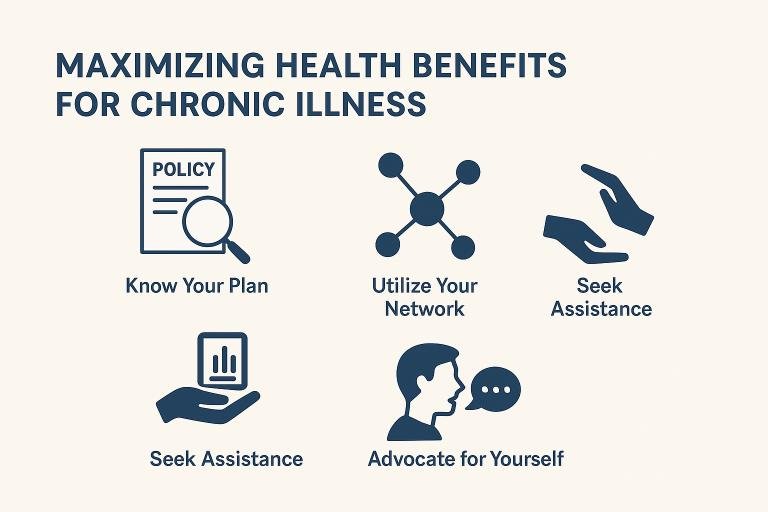
4. Smart Strategies for Managing Chronic Illness Costs
Living with a chronic illness often means living on a budget for healthcare. Here are actionable tips for reducing healthcare costs for chronic patients:
- Understand Your Benefits (Really Understand Them): Call your insurer’s member services line. Ask questions about your specific condition, medication coverage, and specialist visit costs before services are rendered.
- Stay In-Network: Always confirm that your doctors, specialists, labs, and pharmacies are within your plan’s network to avoid higher out-of-network costs.
- Utilize Generic & Preferred Brand Medications: If safe and effective for your condition, opting for generic drugs can save hundreds or thousands annually. Discuss this with your doctor.
- Patient Assistance Programs (PAPs): Many pharmaceutical companies and non-profit organizations offer PAPs to help low-income or underinsured individuals afford expensive medications. Check with your doctor or disease-specific foundations.
- Appeal Denials: If a service or medication is denied, don’t give up! Understand the reason for denial and work with your doctor to file an appeal.
- Use Care Coordinators/Navigators: Some plans offer dedicated care coordinators for members with chronic conditions. They can help you navigate the system, understand benefits, and find resources.
- Track Your Spending to Hit Your OOPM: Keep diligent records of all your medical expenses that count towards your deductible and out-of-pocket maximum. Once you hit your OOPM, covered services are free for the rest of the year – a huge relief for Health Insurance Coverage for Chronic Illness.
Hypothetical Scenario B: Autoimmune Disorder and Prior Authorization
David has an autoimmune disorder requiring an expensive specialty infusion medication. His PPO plan requires prior authorization for this drug.
- Challenge: David receives a notification that his prior authorization has been denied, potentially leaving him with a $5,000 monthly bill.
- David’s Action: He immediately contacts his doctor’s office, who helps him understand the reason for denial (e.g., insurer wants him to try a different medication first). His doctor then gathers additional clinical notes and appeals the decision, advocating for David’s specific medical needs.
- Outcome: The appeal is approved, demonstrating the critical importance of working closely with your healthcare provider and actively pursuing appeals for pre-existing condition health insurance challenges.
For comprehensive and trustworthy information on finding, choosing, and using health insurance, including resources specific to chronic conditions, visit Healthcare.gov.
FAQ: Health Insurance for Chronic Conditions
Can a health insurance company deny me coverage because of a chronic illness?
No, thanks to the Affordable Care Act (ACA). Insurance companies cannot deny you coverage or charge you more based on your health status, including pre-existing conditions.
What is a “formulary” and why is it important for chronic illness?
A formulary is your plan’s list of covered prescription drugs. It’s crucial because it dictates which medications are covered and at what cost (tier). For chronic illness, ensure your necessary medications are on the formulary, preferably at a lower tier.
What is an out-of-pocket maximum, and why is it so important for chronic illness?
The out-of-pocket maximum is the most you’ll pay for covered services in a year. Once you reach it, your plan pays 100%. For chronic illness, hitting your OOPM is a significant financial relief, as it caps your annual medical spending.
How can I find the best health insurance for chronic illness?
Look for plans with a strong formulary that covers your medications, access to your preferred specialists, and a manageable out-of-pocket maximum. Compare plans on Healthcare.gov during open enrollment, or through your employer.
Does Medicare or Medicaid offer better coverage for chronic illness?
Both Medicare and Medicaid can offer robust Health Insurance Coverage for Chronic Illness, depending on your eligibility. Medicare covers individuals 65+ or with certain disabilities, while Medicaid is for low-income individuals. Both are vital safety nets.

Knowledge & Advocacy: Your Most Powerful Tools
Living with a chronic illness requires an incredible amount of resilience, and navigating the complexities of healthcare shouldn’t add to your burden. By understanding the protections offered by the ACA, familiarizing yourself with key insurance terminology, and proactively employing cost-saving strategies, you can transform your experience with Health Insurance Coverage for Chronic Illness.
Empower yourself with knowledge, advocate for your needs, and remember that you have rights and resources. A well-understood and strategically utilized health plan is a powerful ally in managing your chronic condition and improving your quality of life.
Don’t wait for a crisis. Take control of your healthcare journey today – review your current health insurance plan or explore your options on Healthcare.gov to ensure you have the best Health Insurance for Chronic Conditions!

Written by Imran Khan
Founder & Lead Content Specialist, Claimifio
Imran Khan brings over 8 years of experience in digital content creation and web development to Claimifio. As a Senior WordPress Developer at Zikra Infotech LLC, he has worked extensively with healthcare providers including emergency rooms, medical clinics, and specialty practices – giving him deep insight into the challenges patients and families face when navigating insurance systems.
His mission with Claimifio is simple: make insurance understandable for everyone. Every guide is researched thoroughly, written in plain English, and designed to help you take action with confidence.