
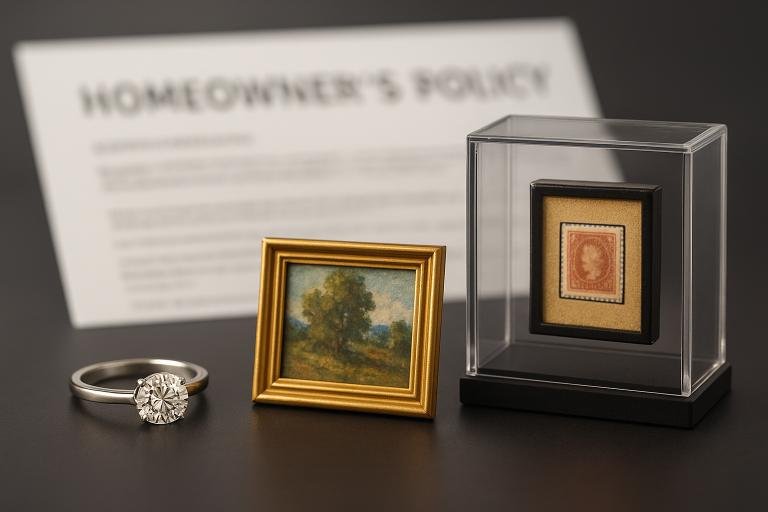
The Hidden Trap: Why Your $100,000 Ring is Only Covered for $1,500
For high-net-worth individuals, managing and protecting valuable assets like fine art, vintage jewelry, and specialized collections is paramount. These assets often represent significant financial investment, cultural value, and family legacy.
However, the majority of US homeowners are dangerously underinsured for these specific items, thanks to a small but critical clause buried in every standard Homeowner’s Policy (HO-3): sub-limits.
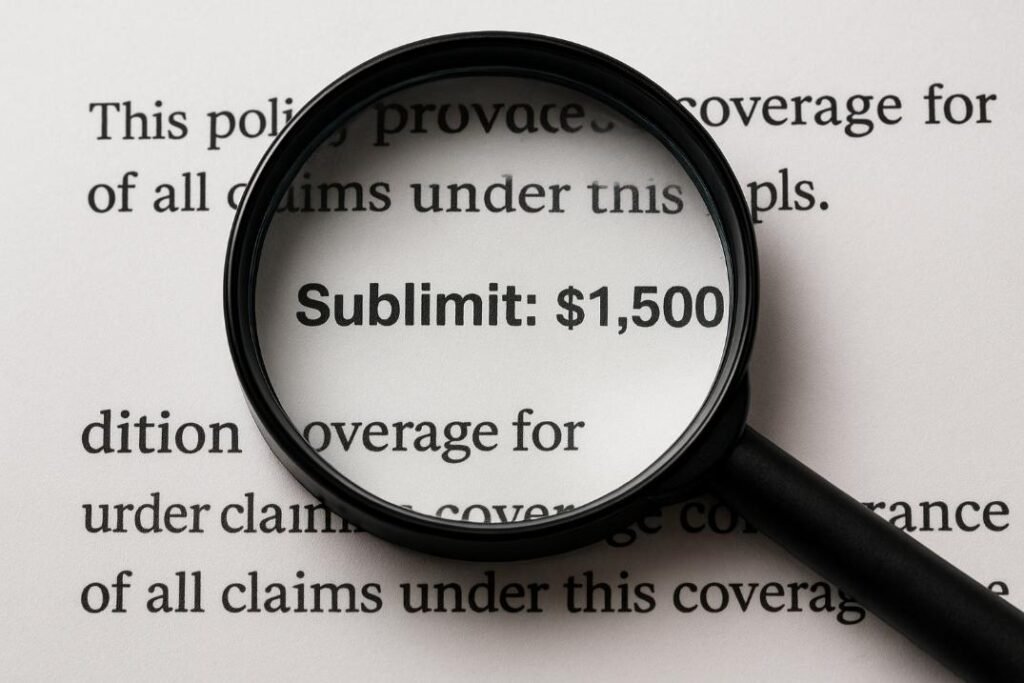
While your policy might offer a high overall limit for your personal property (e.g., $250,000 for Coverage C), it imposes hard caps—or Home Insurance Sublimits Explained—on high-risk, easily transportable items.
| Asset Type | Common Sub-Limit (Standard HO-3 Policy) | Actual Value (Example) | Gap in Coverage |
| Jewelry (Theft) | $1,500 – $2,500 | $25,000 | $23,500 |
| Fine Art (Theft/Damage) | $2,500 – $5,000 | $50,000 | $45,000 |
| Firearms (Theft) | $2,000 – $2,500 | $10,000 | $8,000 |
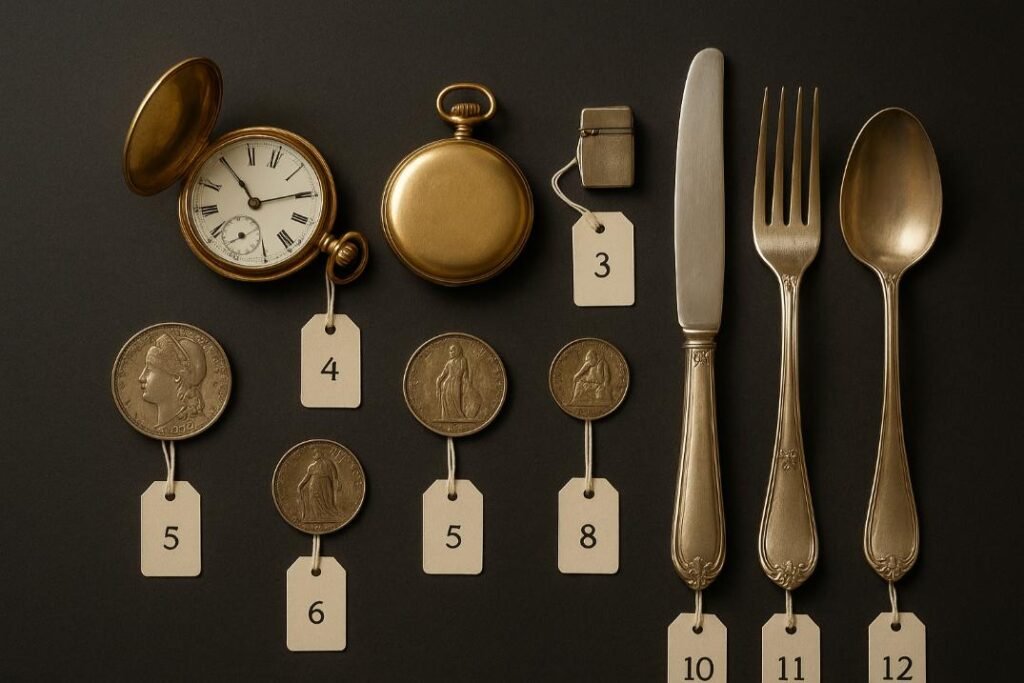
| Silverware/Goldware | $2,500 | $7,000 | $4,500 |
If your $25,000 engagement ring is stolen, your insurer may only pay you $1,500 (minus your general deductible), leaving you to cover the staggering difference. This is why standard coverage is inadequate.
The solution is moving these specific items out from under the general policy limits and onto a specialized form of coverage known as Scheduled Personal Property Insurance.
1. The Definitive Solution: Scheduled Personal Property Insurance
Scheduled Personal Property Insurance (also called a Personal Articles Floater, or PAF) is an endorsement—a rider—added to your existing homeowner’s policy, or it can be purchased as a separate, stand-alone policy.
Scheduling an item provides three immense benefits that standard HO-3 coverage simply cannot match:
A. Higher Limits (Full Value Protection)
When you schedule an item, it is listed individually on the policy with its precise, current appraised value. That item is then insured up to that specific limit, bypassing the low Home Insurance Sublimits Explained earlier.
B. Broader Coverage (All Risk Protection)
Standard personal property coverage operates on a “Named Perils” basis—it only covers losses caused by perils explicitly named in the policy (e.g., fire, theft).
Scheduled coverage is typically “All-Risk” or “Open Peril.” This means it covers all types of loss unless specifically excluded. This protection is vital for high-value items because it often covers:
- Mysterious Disappearance: Accidentally losing a piece of jewelry (e.g., dropping a ring down a drain).
- Accidental Damage (Breakage): A child knocking a sculpture over or wine spilling on a valuable rug.
C. No Deductible (or a Lower Deductible)
Unlike standard homeowner claims, which often involve a $1,000 to $5,000 deductible, many Scheduled Personal Property Insurance policies offer a $0 deductible for scheduled items. This means in the event of a covered loss, you get the full Agreed Value payout.
If you are an international traveler, understanding how liability follows you is key. Learn how to protect your assets from global lawsuits: Personal Liability Protection: Why International Travelers Need a US Umbrella Policy.
2. The Process: How to Schedule Your High-Value Assets
The process of securing adequate coverage for your collection requires active involvement from the policyholder.
Step 1: Inventory and Appraisal
Before you can secure a Jewelry Insurance Rider or fine art coverage, you must prove the item’s value.
- Receipts: Used for recently purchased items.
- Appraisals: Required for most valuable or antique items (especially art, heirlooms, and vintage jewelry). Appraisals should be no older than 3 to 5 years, as market values for art and jewelry fluctuate rapidly.
Step 2: Agreed Value vs. Replacement Cost
When you schedule an item, the insurer typically agrees to one of two valuation methods:
- Agreed Value (Common for Art/Collectibles): The insurer and the policyholder agree on a fixed value before the policy is issued. If a total loss occurs, the insurer pays that specific, agreed-upon amount (the amount on the appraisal), regardless of current market value. This is ideal for Insuring Fine Art US and rare collections.
- Replacement Cost (Common for New Jewelry): The insurer pays the cost to replace the item with a new one of like kind and quality.
Step 3: Select Coverage Type
You have three main ways to insure collections:
- Itemized Scheduling: Listing each item individually (recommended for high-value pieces like a single master painting or an engagement ring).
- Blanket Coverage: Used for a cohesive collection where individual values are low, but the total collection value is high (e.g., a stamp collection or wine cellar). You choose a single high limit (e.g., $50,000) to cover the entire class of property.
- Stand-Alone Policy: Using a specialty carrier (like Chubb, PURE, or Jewelers Mutual) instead of an endorsement. This is often the preferred route for owners of very large or extremely valuable collections ($500,000+ total value), as it separates the claim history from the main homeowner’s policy.
The International Council of Museums (ICOM) often provides ethical and practical guidance on collecting and valuation. Consulting their resources can help HNW individuals understand best practices for collection management, which impacts insurance.
3. Beyond the Walls: Worldwide Coverage & Specific Perils
One of the great advantages of a Personal Articles Floater is that the coverage typically follows the item anywhere in the world. This is vital for international travelers and expats.
- Jewelry: Covered while you wear it abroad, traveling between US and international residences, or when it is temporarily placed in a safe deposit box.
- Art: Can be covered while in transit, at an art restorer, or even while on loan to an accredited museum or gallery (though specific conditions often apply).
Exclusion Alert: Wear and Tear
Even the best Scheduled Personal Property Insurance does not cover certain perils. The most common exclusion is wear and tear, deterioration, rust, insects, or inherent vice (a fault in the item itself). Coverage is for sudden, accidental events, not gradual degradation.

Secure Your Legacy
Your jewelry, art, and collections are more than just items; they are investments in culture and personal history. Relying solely on the Home Insurance Sublimits Explained by your standard policy leaves your wealth dangerously exposed.
By proactively securing Scheduled Personal Property Insurance—individually itemizing your most valued possessions—you ensure that in the face of theft or accidental loss, you receive the full, non-depreciated replacement value, allowing you to quickly recover or replace your cherished assets, wherever your international life takes you.
Do you know the exact sub-limits on your current homeowner’s policy? Contact a specialized high-net-worth insurance broker today to get an accurate valuation and secure a Personal Articles Floater for your collections!

Written by Imran Khan
Founder & Lead Content Specialist, Claimifio
Imran Khan brings over 8 years of experience in digital content creation and web development to Claimifio. As a Senior WordPress Developer at Zikra Infotech LLC, he has worked extensively with healthcare providers including emergency rooms, medical clinics, and specialty practices – giving him deep insight into the challenges patients and families face when navigating insurance systems.
His mission with Claimifio is simple: make insurance understandable for everyone. Every guide is researched thoroughly, written in plain English, and designed to help you take action with confidence.