The Risk of Absence: Why Your Primary Policy Won’t Work Twice
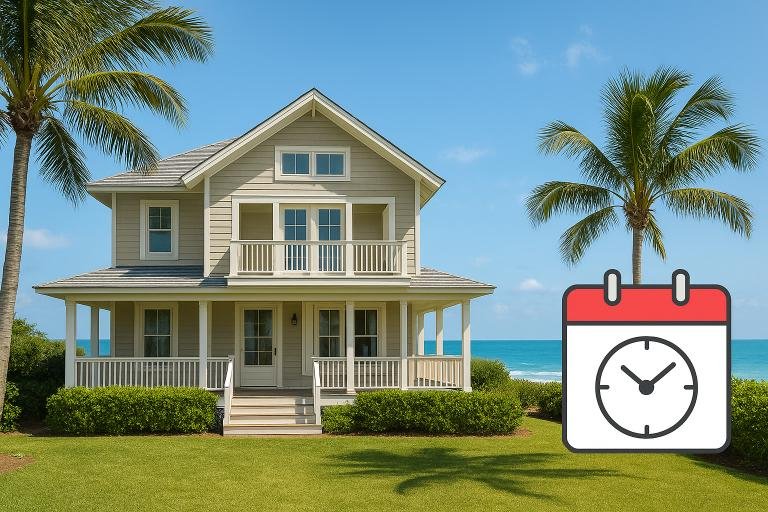
Owning a vacation property in the US is a goal for many international investors and “snowbirds”—retirees who seasonally travel from colder climates (often Canada or the northern US) to warmer states like Florida or Arizona.
However, many buyers make a critical assumption: that their existing primary homeowner’s insurance (HO-3) can simply be duplicated for their second home. This is incorrect.
A standard HO-3 policy is designed for owner-occupancy. Once you designate a property as a secondary, seasonal, or non-primary residence, its risk profile changes dramatically. It is no longer monitored daily, and this prolonged absence exposes it to specific hazards: burst pipes, undetected vandalism, and theft that goes unnoticed for weeks or months.
To adequately protect your US asset, you must secure a specialized Second Home Insurance USA policy. This guide details the differences, risks, and necessary coverages for your intermittent dwelling.
1. The Critical Distinction: Occupancy vs. Vacancy
The main driver of the difference in policies is occupancy frequency. Insurers categorize homes based on how often someone is physically present, which dictates the level of risk.
- Primary Residence: Occupied 365 days a year. Risk is low because issues (leaks, fire) are noticed immediately.
- Second/Seasonal Home: Occupied intermittently (e.g., 2–6 months per year).
- Vacant Home: Completely empty of inhabitants and personal belongings for 30–60 consecutive days.
The Dangers of the “Vacancy Clause”
If your second home is deemed vacant by your insurer (often if unoccupied for 30 to 60 days), coverage for specific perils—such as vandalism, glass breakage, water damage from frozen pipes, and theft—may be severely restricted or voided entirely.
Second Home Insurance USA is specifically designed to manage this higher risk by extending the period of unoccupancy coverage compared to a standard HO-3.
2. Key Differences in Seasonal Home Coverage
While a Second Home Insurance USA policy often mimics the structure of an HO-3 (covering Dwelling, Other Structures, and Contents), the limits and endorsements are tailored to absence.
A. Named Perils vs. Open Perils (The Coverage Trap)
Many insurers are hesitant to offer “Open Perils” coverage (which covers everything unless specifically excluded) on a non-primary residence.
- You might be offered a “Named Perils” policy, which only covers risks explicitly listed (e.g., fire, hail, windstorm).
- Actionable Advice: Always aim for an Open Perils policy for your dwelling (Coverage A). If you must accept Named Perils, ensure that essential risks like falling objects, theft, and vandalism are explicitly included.
B. Water Damage Exclusion (The Hidden Risk)
The biggest risk for an unmonitored home in a cold climate is a burst pipe. If the home is vacant for an extended period, the policy may exclude coverage for damage caused by frozen or bursting pipes unless you prove you took preventative measures.
- Required Endorsement: Look for an endorsement that covers water damage from pipes, even during periods of unoccupancy, provided the water was shut off or the heat was maintained above a certain minimum temperature (e.g., 55°F).
C. Personal Property Limits
Many Vacation Property Insurance US policies place a strict limit on contents coverage, especially for items left behind, recognizing that you don’t keep all your valuable belongings there. Ensure the limit is sufficient to cover furnishings, appliances, and essential electronics.
If your property contains high-value artwork or jewelry, your second home policy will have low limits. You’ll need to look at specialized coverage: High-Value Assets: The Master Guide to Insuring Collections, Art, and Jewelry in the US.
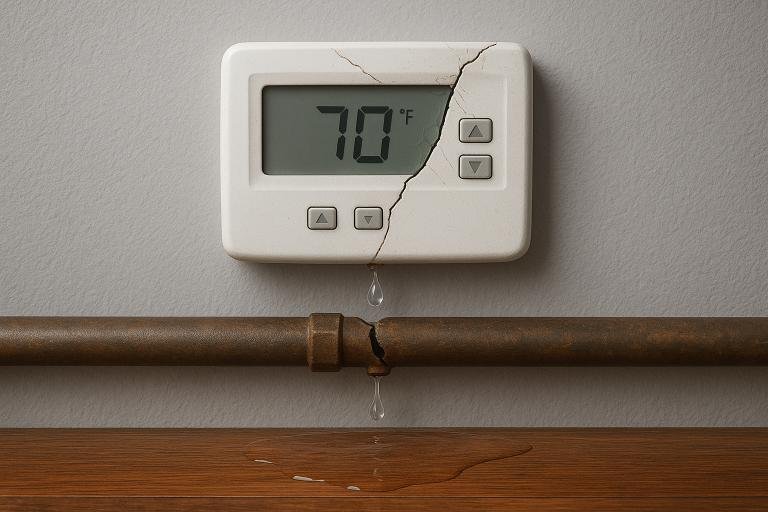
Image 1 Suggestion: A close-up of a broken thermostat on a wall, next to a burst pipe leaking water onto a wood floor. This visually represents the common, costly danger of “frozen pipe damage” in an unmonitored winter home.
- Alt Text: Undetected burst pipe damage in a Seasonal Home Coverage scenario, a high risk for Second Home Insurance USA.
3. Location-Specific Risks and Required Add-Ons
The location of your Vacation Property Insurance US asset directly dictates which catastrophic risks you must insure against separately.
| Location | Primary Risk | Required Separate Coverage |
| Florida/Carolinas (Coastal) | Hurricane, Hail, Windstorm | Often requires a separate Wind/Hail deductible or a Named Storm Endorsement. |
| California | Earthquake | Requires a separate Earthquake Policy (excluded from HO-3 and most Second Home policies). |
| Any Coastal or River Property | Flood/Storm Surge | Requires a separate NFIP or Private Flood Insurance policy. |
Consult a reputable US organization like the Insurance Information Institute (III) for state-specific disaster preparation guides and insurance requirements before purchasing.
4. The Liability Factor for Absent Owners
Liability coverage (protecting you if someone is injured on your property) is crucial. When you are hundreds or thousands of miles away, you cannot mitigate safety risks immediately.
Attractive Nuisances
If your non-primary residence has a swimming pool, trampoline, or even a boat dock, it is considered an “attractive nuisance.” If a neighborhood child (or anyone else) is injured on your property while you are absent, you are financially exposed.
- Actionable Advice: Ensure your Seasonal Home Coverage includes a liability limit of at least $500,000. If you have significant US or international assets to protect, a Personal Umbrella Policy (PUP) is non-negotiable, acting as an extra layer of liability protection.
Understand how an umbrella policy can protect your wealth from lawsuits related to your US property: Personal Liability Protection: Why International Travelers Need a US Umbrella Policy.
5. Risk Mitigation: The Path to Lower Premiums
Because Second Home Insurance USA is inherently riskier, the premiums are typically 10% to 20% higher than those for a primary home. You can offset this by proving you actively manage the risk of absence:
- Water Shut-Off: When leaving for more than a few days, always shut off the main water valve and drain the pipes (especially in cold regions).
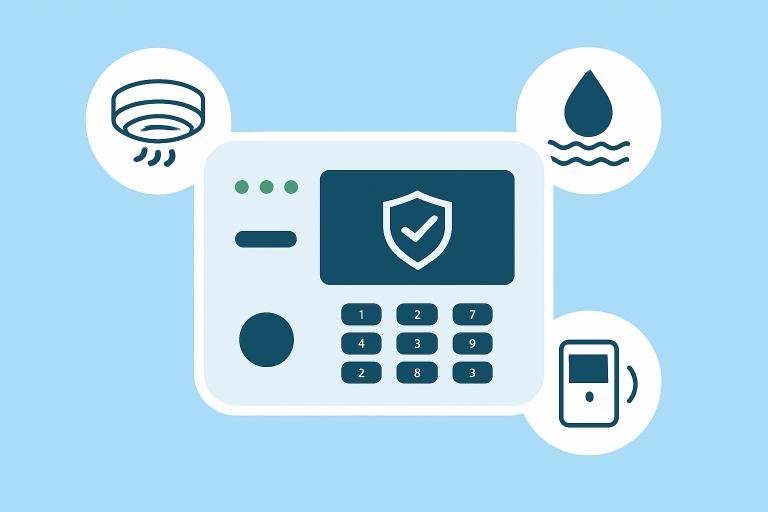
- Smart Monitoring: Install smart water sensors near high-risk areas (water heater, laundry) and a low-temperature alarm that alerts a local contact if the temperature drops too low.
- Local Caretaker: Appoint a trusted local contact (neighbor or professional property manager) to visit the home regularly (e.g., every 7-14 days). Document these visits. Some insurers require this physical check to keep coverage valid.
- Security Systems: Install a monitored alarm system to deter theft and vandalism, which often qualifies you for a premium discount.
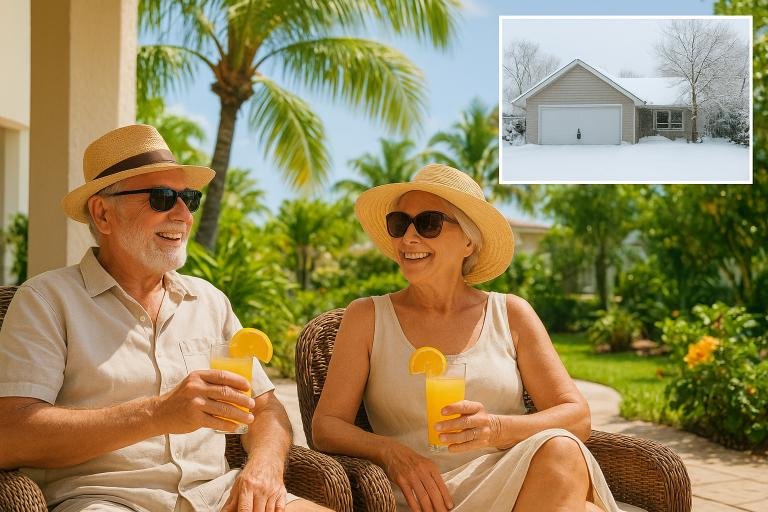
Secure Your Peace of Mind, Wherever You Roam
Whether you are seeking a tropical winter escape or a sound US investment, your non-primary residence requires focused, specialized insurance. Never assume that a generic HO-3 policy is enough; you risk a devastating claim denial due to the unforgiving Vacancy Clause.
By working with a US broker who understands Seasonal Home Coverage and by actively implementing risk mitigation measures, you can ensure your US second home remains a source of joy and stability, protected year-round.
Do you own a second home in the US? Review your policy’s unoccupancy clause today, and contact a specialized broker to ensure your liability limits and water damage endorsements provide true year-round protection!

Written by Imran Khan
Founder & Lead Content Specialist, Claimifio
Imran Khan brings over 8 years of experience in digital content creation and web development to Claimifio. As a Senior WordPress Developer at Zikra Infotech LLC, he has worked extensively with healthcare providers including emergency rooms, medical clinics, and specialty practices – giving him deep insight into the challenges patients and families face when navigating insurance systems.
His mission with Claimifio is simple: make insurance understandable for everyone. Every guide is researched thoroughly, written in plain English, and designed to help you take action with confidence.